ICMR deadlines by Sep 30; nanomedicine push—key Sci-Tech updates in last 48 hrs
ICMR closes Intramural, SARANSH-3 EOI and VRDL calls by Sep 30; Centre flags nanomedicine as a driver of precision, personalised healthcare.
⭐ Key Points
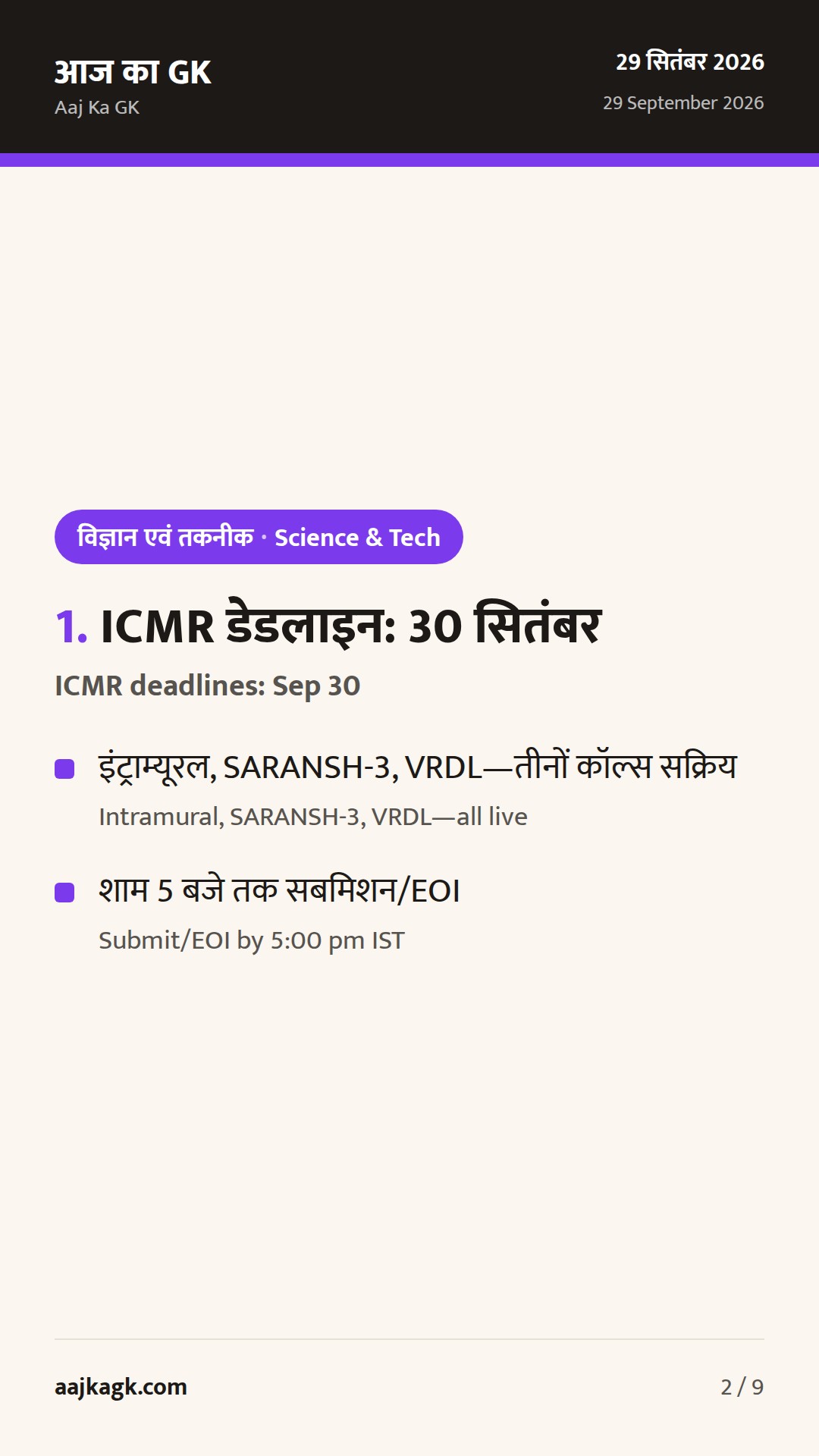
- ICMR Intramural Research call closes on Sep 30, 2026 at 5:00 pm IST.
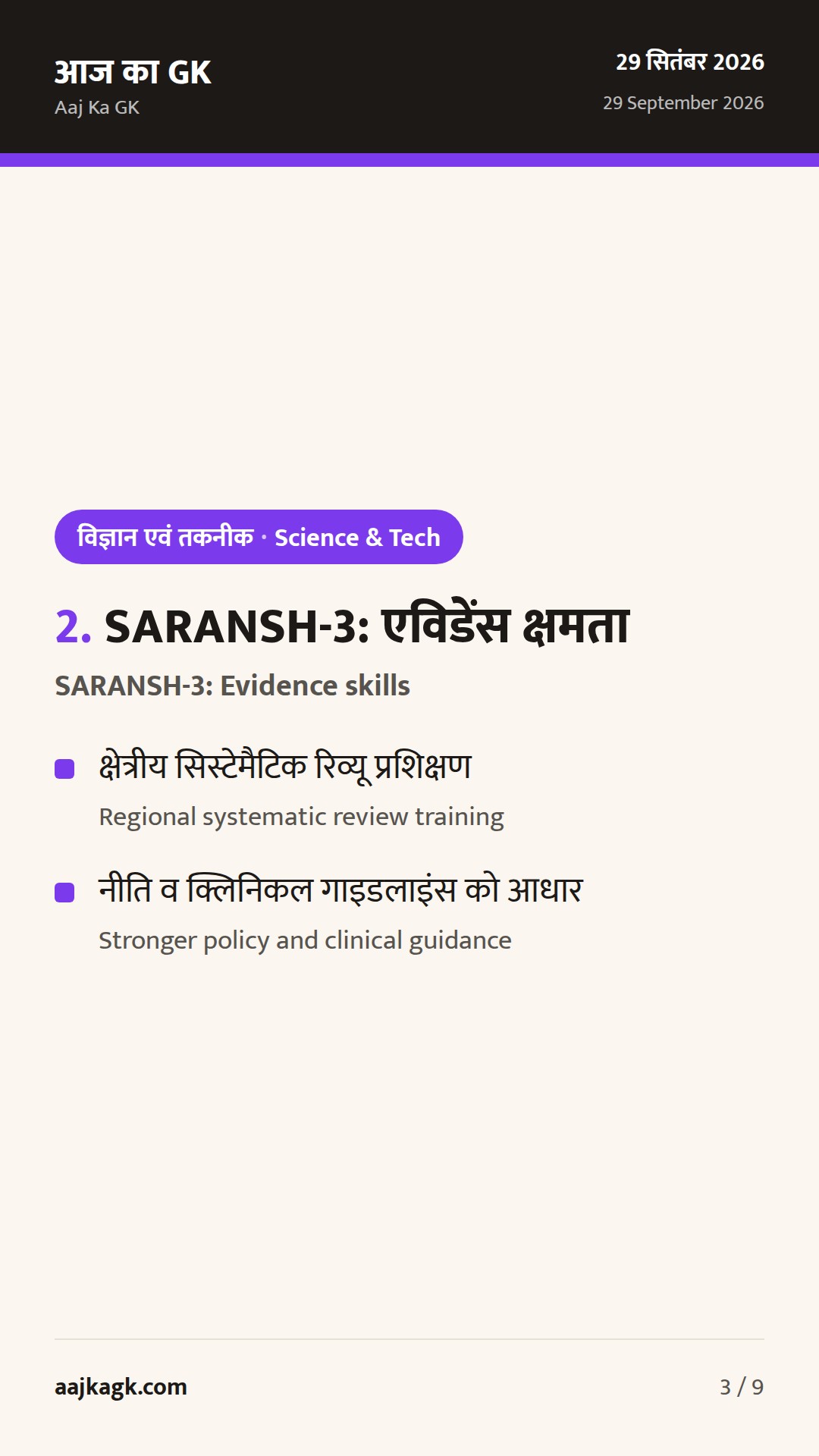
- ICMR’s SARANSH-3 (EOI) is open till Sep 30, 2026—focused on systematic review capacity.
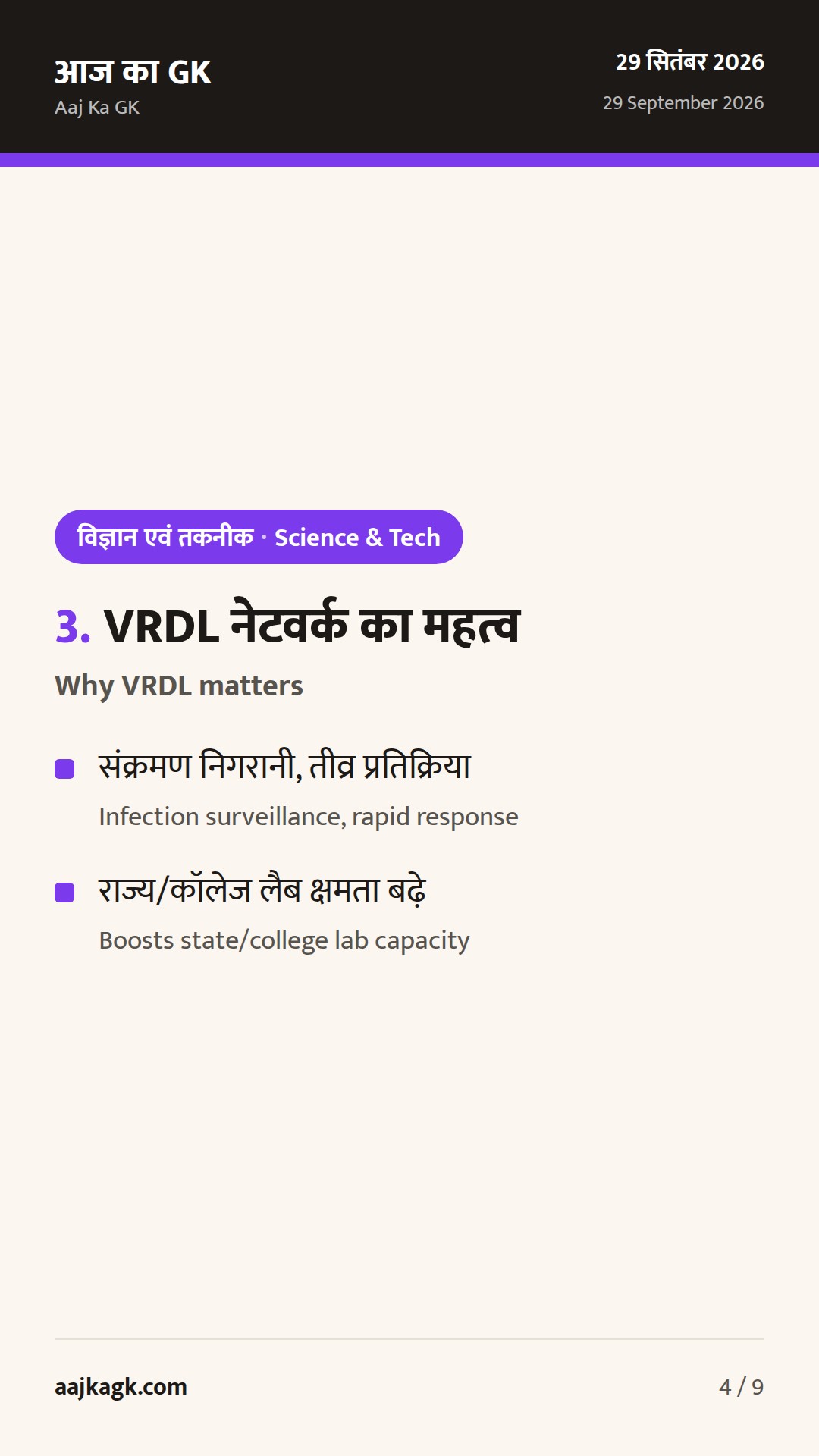
- VRDL setup call open till Sep 30, 2026—strengthens public-health surveillance.
- ICMR ‘What’s New’ aggregates these live calls and updates.
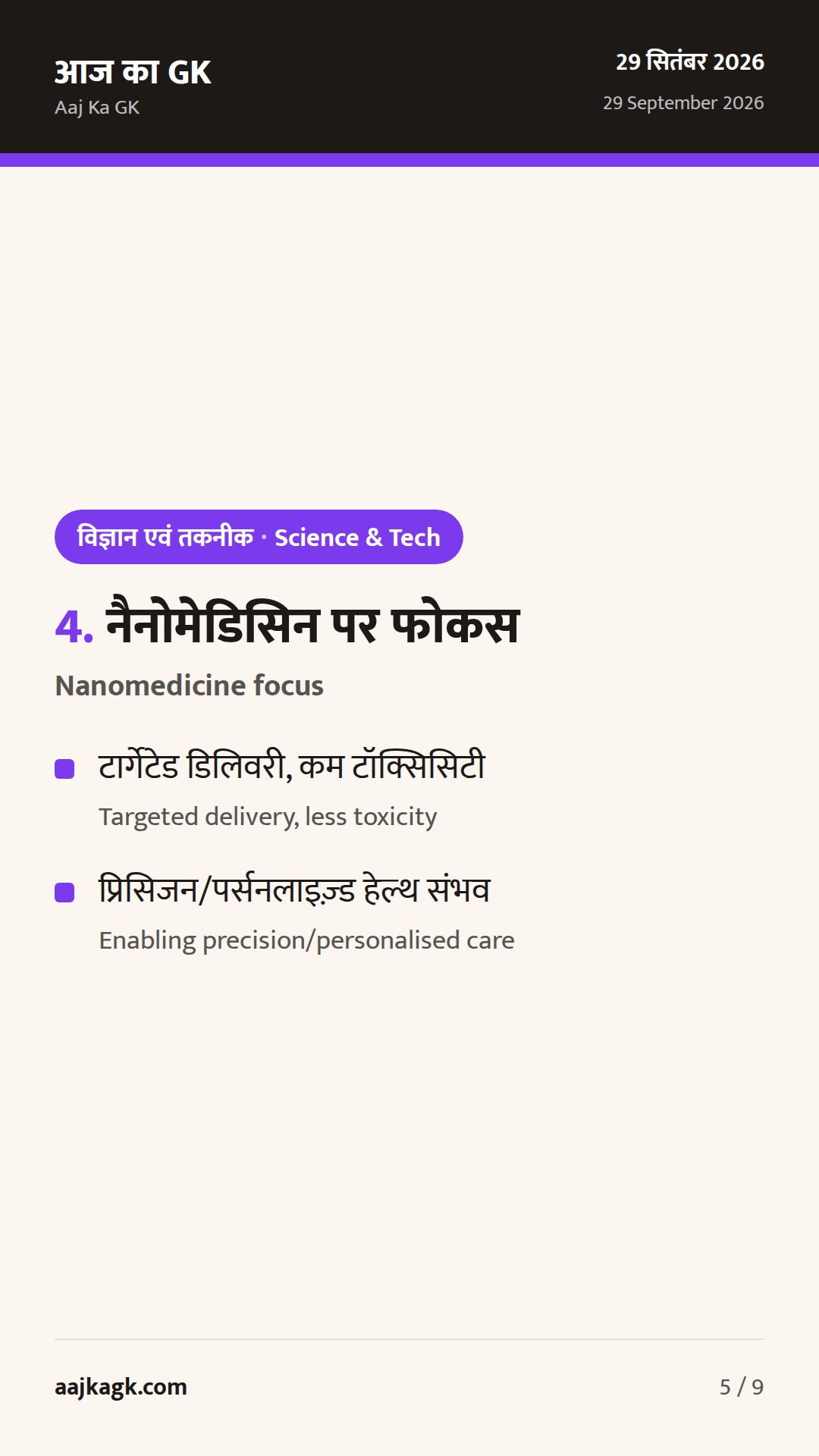
- Union Minister flagged nanomedicine as a driver of precision and personalised care.
- Nano-based delivery reduces off-target toxicity while improving efficacy.
- Policy-backed biotech/medtech missions are accelerating health innovation.
- For UPSC/SSC, revise ICMR programmes, VRDL network and nanomedicine uses.
ICMR: Intramural, SARANSH-3 and VRDL calls close on Sep 30
What happened
India’s apex health research body ICMR has set the deadline of September 30, 2026 (5:00 pm IST) for its Intramural Research Programme submissions. Two parallel calls—EOI under SARANSH-3 for regional capacity building in systematic reviews, and proposals to set up Viral Research & Diagnostics Laboratories (VRDL) in medical colleges/hospitals—also remain open till September 30, 2026. These updates are listed on ICMR’s official “What’s New” and dedicated call pages.
Background
ICMR funds and guides research aligned to India’s public-health priorities. The Intramural window supports investigators across ICMR institutes. SARANSH-3 aims to strengthen evidence-synthesis skills so that clinical guidelines and policies are backed by high-quality systematic reviews and meta-analyses. Expansion of the VRDL network enhances epidemic preparedness, early detection and response for emerging/re-emerging infections.
Why it matters for exams
- Common deadline: September 30, 2026 (Intramural, SARANSH-3 EOI, VRDL calls).
- Intramural = competitive in-house grants across ICMR institutes with public-health relevance.
- SARANSH-3 = capacity building in systematic reviews/evidence synthesis for policy.
- VRDL = strengthens lab-based surveillance and outbreak response at the state/college level.
- Useful for UPSC S&T, SSC science, State PCS, and public-health case studies.
Nanomedicine: powering precision and personalised healthcare
What happened
On September 27, 2026, the Union Science & Technology Minister highlighted nanomedicine as a key driver of next-gen precision and personalised healthcare—echoing recent Ministry communications on science-led health solutions and greater industry–academia participation across biotech/medtech missions.
Background
Nanomedicine leverages nano-scale materials/carriers for targeted drug delivery, diagnostics and theranostics. India is aligning with global trends to improve outcomes in cancer, infections and metabolic diseases through precise targeting. Policy push in AI, biotech and digital health is enabling translation from lab to clinic, while strengthening regulatory science and clinical research pipelines.
Why it matters for exams
- Nanomedicine improves efficacy and reduces off-target toxicity via targeted delivery.
- Precision health relies on biomarkers/genomics; needs regulatory and translational support.
- India’s biotech/medtech missions emphasise start-up–PSU–academia convergence.
- Exam connect: applications of nanotech in health, ICMR programmes, VRDL network.
Static GK/context
What to revise
- ICMR programme architecture: Intramural vs Extramural; objectives of the VRDL network.
- Role of systematic reviews in evidence-based policy; training and quality standards.
- Nanotech in health: liposomes/nanoparticles, targeted delivery, advanced diagnostics.
Rapid recap
- ICMR has three crucial calls closing on Sep 30—deadline-focused update.
- National emphasis on nanomedicine for precision, personalised healthcare.
Important Facts for Exams
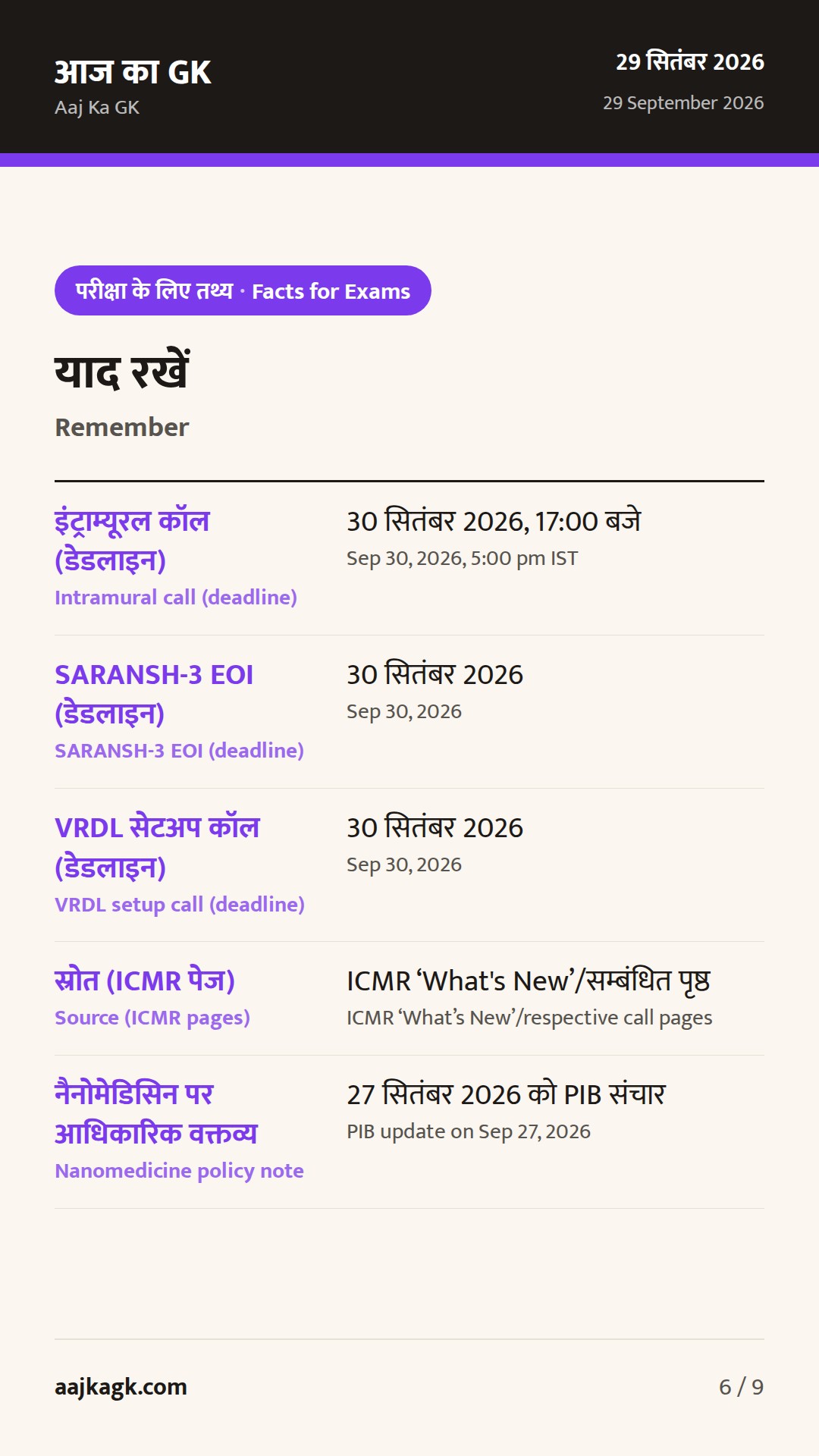
| Intramural call (deadline) | Sep 30, 2026, 5:00 pm IST |
|---|---|
| SARANSH-3 EOI (deadline) | Sep 30, 2026 |
| VRDL setup call (deadline) | Sep 30, 2026 |
| Source (ICMR pages) | ICMR ‘What’s New’/respective call pages |
| Nanomedicine policy note | PIB update on Sep 27, 2026 |
Practice Questions (MCQ)
👆 Tap an option — you'll instantly see if it's right or wrong.
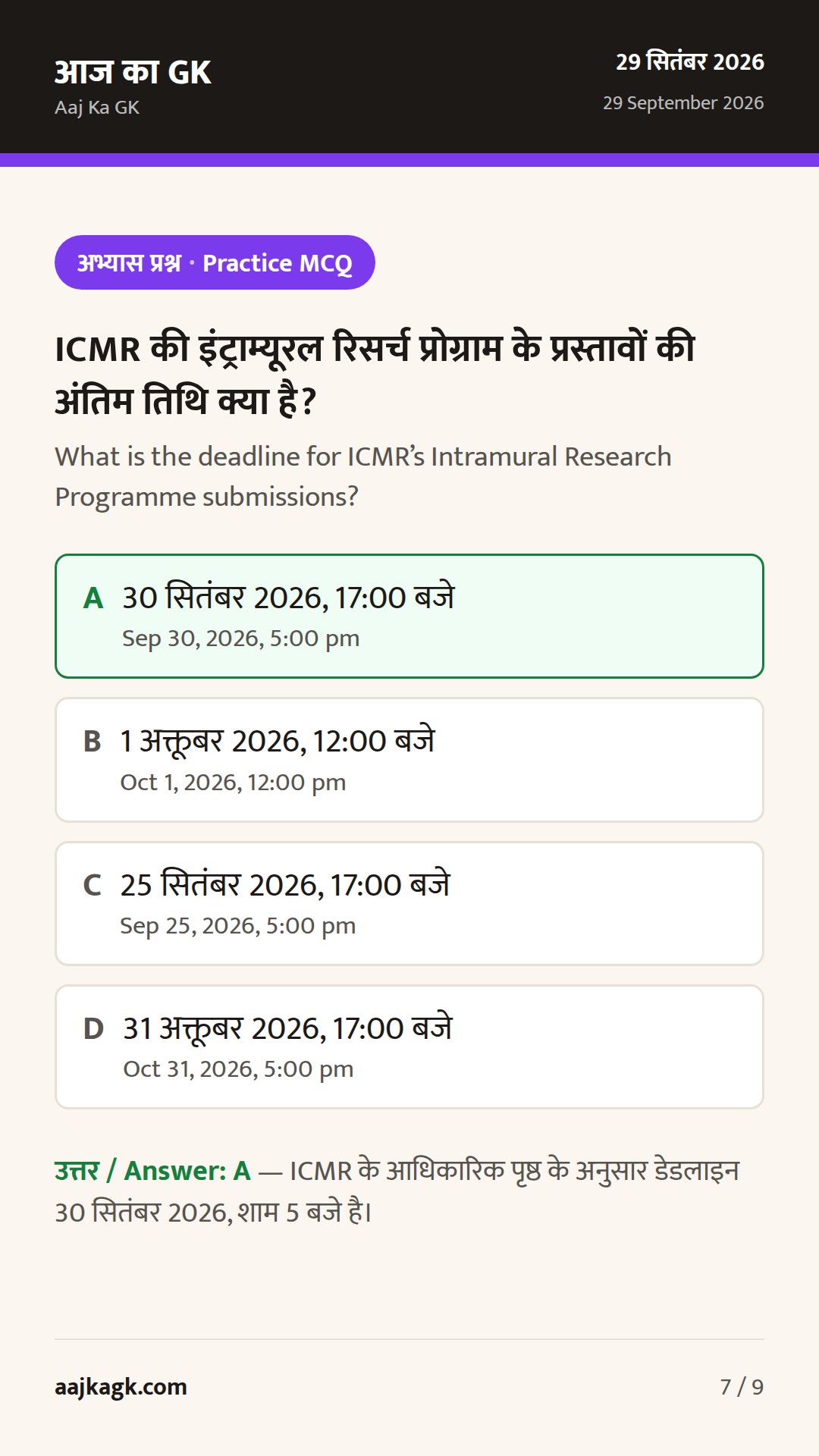
Q1 What is the deadline for ICMR’s Intramural Research Programme submissions?
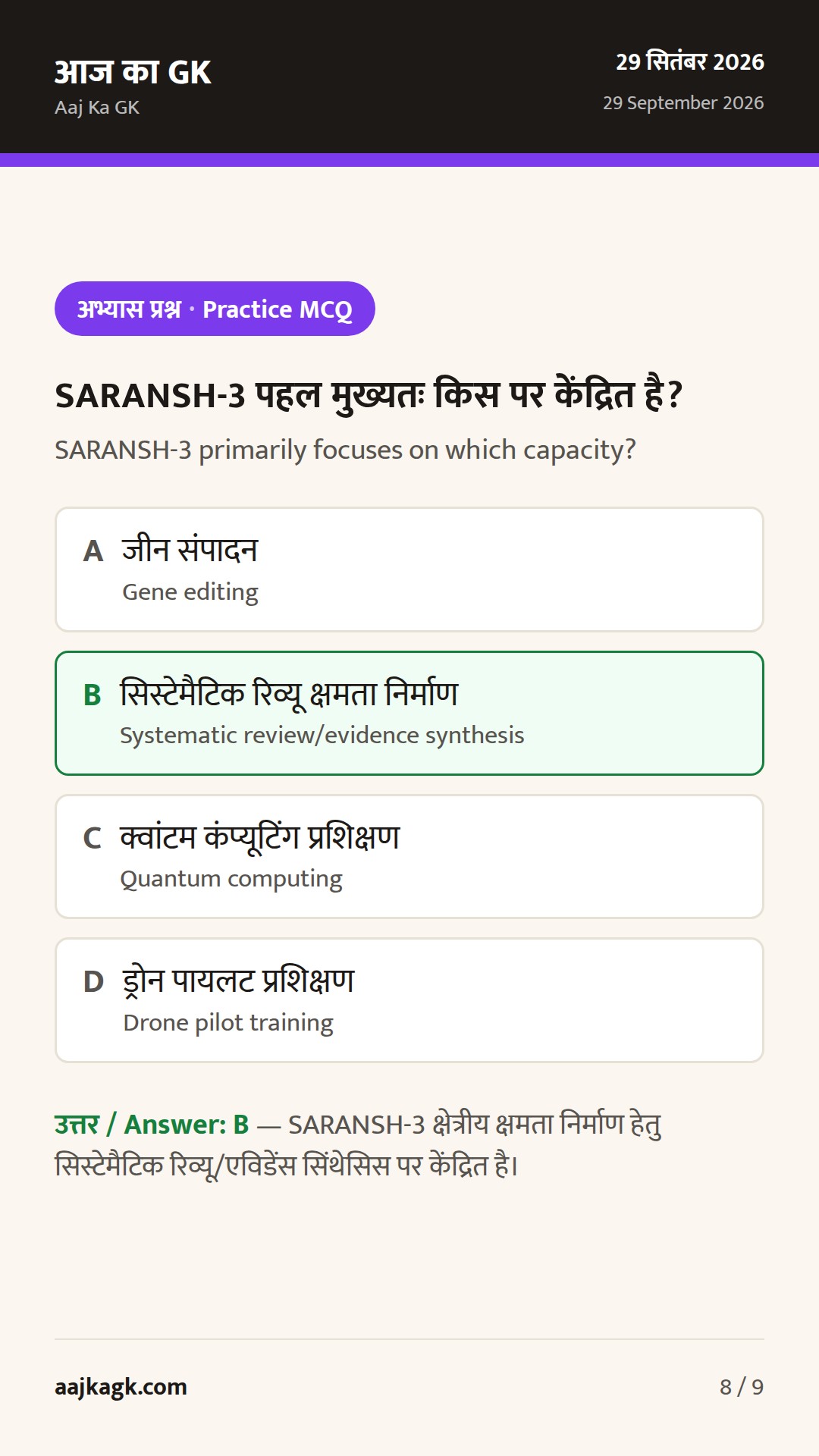
Q2 SARANSH-3 primarily focuses on which capacity?
Q3 The core aim of the VRDL network is to strengthen:
Q4 According to a recent PIB update, which field will drive precision healthcare?
Q5 A direct benefit of nanomedicine is:
Sources